

Cinema as a supplement to therapy
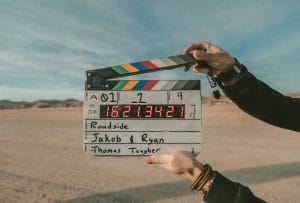
Photo by Jakob Owens on Unsplash
Over the years I have regularly suggested a variety of films to clients to support our work together.
Admittedly I have been going to the cinema from before many of my clients were born. I can remember as a youngster seeing films like “The Great Race”, and “Those Magnificent Men in Their Flying Machines or How I Flew from London to Paris in 25 Hours 11 Minutes” whose musical soundtrack was one of the first LP’s (or Long-Playing records for those not familiar with the lingo,) I ever bought and “Round the world in 80 days”.
Nowadays I will suggest to clients films like “Sliding Doors” about how the “fickle finger of fate” can impact an individual’s life. Although I wouldn’t go as far as Steve Martin’s character Davis in “Grand Canyon” that “That’s part of your problem: you haven’t seen enough movies. All of life’s riddles are answered in the movies.”
Certainly, I have a handout I may give to clients dealing with grief with a list of almost 30 films related to the subject and how grief and loss can impact individuals, families and communities. Some of my favourites include “The Way” with Father and Son, Emelio Estevez and Martin Sheen (playing those same roles in the movie) as they follow the path of the pilgrims on the long trek, the El Camino Way across Spain. With the multi-award winning series Six Feet Under being another perennial favourite. It deals, not only with death and its aftermath, (following the trials and tribulations in a family run funeral home), it also covers so much more “territory”. Like family dynamics and it’s impacts in a family-run business, drug use, interpersonal relationships, infidelity, having a gay son in the family, re-partnering after a death and so much more.
Similarly on the Resources sub-page of the Gay and Lesbian Issues page there are over 50 films and documentaries. The collection, dating from the 1961 film Victim about how Homosexual men in the 1960’s were at risk of blackmail, due to the illegal nature of their lives. Through to various later films like “And the Band Played On” related to how the HIV/AIDS crisis impacted both the Gay and broader community. As well as others about murders of Gay people like in Nazi Germany (Bent), Harvey Milk (Milk) and Matthew Shepard (The Laramie Project). But it also has lots of love stories, like the favourite of many Gay men, “Beautiful Thing”, and the more recent “Love Simon” looking at the challenges for a modern young Gay man, with it’s fabulous “Why is straight the default?” clip. This is apart from the classic Gay Cowboy film “Brokeback Mountain”. There’s also the story of a mature-aged Gay male couple dealing with the challenges of Alzheimer’s in Supernova and many others.
Other favourites, depending on the scenario, include “October Sky” one of Jake Gyllenhaal’s early films about following your dreams. “Breathe” is another, being the real story about coping and dealing with unexpected changes, when the central character contracts polio. In more general terms there are “Feelgood” films like the docudrama “A beautiful day in the neighbourhood” about the American children’s TV presenter Mr Rogers and how he assisted children deal with complex social issues.
Although I wouldn’t necessarily agree with Steve Martin’s character referred to above in Grand Canyon (about an unlikely friendship that develops between two men, from opposite ends of the social spectrum,) that “All of life’s riddles are answered in the movies”. I do believe that movies (whether seen in a theatre or via a commercial streaming service or via a service like Kanopy– via your local library) can certainly provide some “food for thought” when dealing with life’s troubling situations.